


Kalpana, 14, and Samuna, 16, from the Nepali Newsroom report on recent clashes between Hindus and Muslims
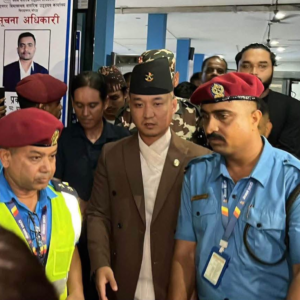
Home minister Sudan Gurung centre en route to Madhes and Koshi provinces Nepal
23 October 2026
Nepal witnesses deadly communal violence
On 26 July, Nepal witnessed some of the ugliest communal tensions in recent times. The incident has claimed over four lives so far.
A conflict broke out between the Hindu and Muslim communities over music and a religious flag-hoisting ceremony during the Bol Bam pilgrimage (an important event in the Hindu calendar) in a village in the Sunsari district in Koshi province in southern Nepal.
The police opened fire, killing three young Hindu men. Another teenager was killed four days later, also after being shot by police.
The conflict spread throughout the Koshi and Madhes province and the incident shocked the nation as it spiralled into a national crisis. Prime Minister Balendra Shah had to release a short video message calling for peace and harmony in the country.
President Ram Chandra Paudel issued a message urging political parties, civil society organisations and citizens to maintain peace, order and national unity.
Major political parties, including the Rastriya Swatantra Party (the ruling party) and the Nepali Congress (the major opposition party), also issued statements requesting harmony in the country.
On 31 July, the prime minister held his first meeting with regional leaders to discuss the situation and possible solutions. Home Minister Sudan Gurung spent four days in the Tarai region to understand the situation and reach an agreement with the families of the deceased.
A small misunderstanding can become a major issue if it is not controlled quickly, so it is important to understand what caused the problem and how it became violent.
A dispute between Hindus and Muslims in Sunsari district in Koshi province on the night of 26 July escalated, ending with the police opening fire into the crowd. The shootings resulted in the deaths of three young Hindu men – Jay Prakash Mehta, 25, Om Prakash Mehta, 30, Rabindra Mehta, 21 – and injuries to ten others.
Harbingers’ Weekly Brief
Subscribe to the Harbingers’ Weekly Brief, a newsletter written by the editorial board of Harbingers’ Magazine, the world’s youngest newsroom, delivered to your inbox every Monday morning.
![image]()
![author_bio]()
![author_bio]()
![author_bio]()


Four days later, Ganesh Yadav, 15, was killed by security forces following another clash in the Siraha district of Madhes province.
The unrest then spread to other Tarai districts including Saptari, Siraha, Dhanusha and Parsa, which led authorities to impose curfews in those districts.
These events show that communal tension has become a serious problem in the Himalayan nation, widely known as the most peaceful country in the region. The country’s Constitution stipulates that Nepal is a multi-religious, multicultural, multi-ethnic and multilingual country.
Harbingers’ spoke to people in Kathmandu who have been observing these recent incidents. They said that sometimes people react quickly without thinking, which makes the situation worse.
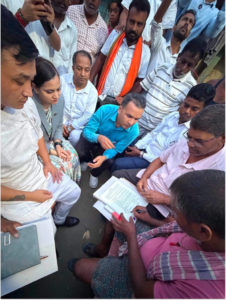
Left to right Home minister Sudan Gurung health minister Nisha Mehata and industry minister Deepak Kumar Sah with the father far right of Om Prakash Mehta killed by police on 26 July
False information is also a big problem. This information can spread very fast during these times, making people angry and leading to fights. So, it is very important to check the truth before believing or sharing anything.
Ramesh Dev Sunar emphasised that respect is very important in society. People should respect each other’s religion, culture and way of life. “If there is a problem, it should be solved by talking calmly. Fighting only makes the situation worse, but discussions can bring peace and understanding,” he told Harbingers’.
“The government and leaders also have a big role. They should act quickly when problems happen. Strong security, fast response and awareness programmes can help stop violence. Schools, families, and communities should also teach children about peace, unity, and respect for others.”
According to Bikash Gupta, a teacher and advocate at Nepal’s Supreme Court, the government must rebuild the credibility of its security forces and restore people’s confidence in them.
“No one should be allowed to take a dividend out of violence,” he said. “The state needs to communicate. At the same time, the state needs to be sensitive and must not compromise on serious and fundamental constitutional questions and must end the vicious circle of impunity.”
While writing this article, interviewing people and researching, we understood that these incidents show that communal tension can become very dangerous if it is not controlled in time. Everyone should work together to keep peace in the country.
People should stay calm, avoid rumours, think before acting, and respect each other. This is the best way to maintain harmony in Nepal and keep society safe for everyone.


Edited by:

© 2026 The Oxford School for the Future